
Nutsedge
Underground tuber network extends over a foot deep and spreads laterally. Each tuber produces a new plant. A single plant can produce 1,900 tubers in a season. Tubers remain dormant for years. Pulling stimulates new growth from remaining fragments.
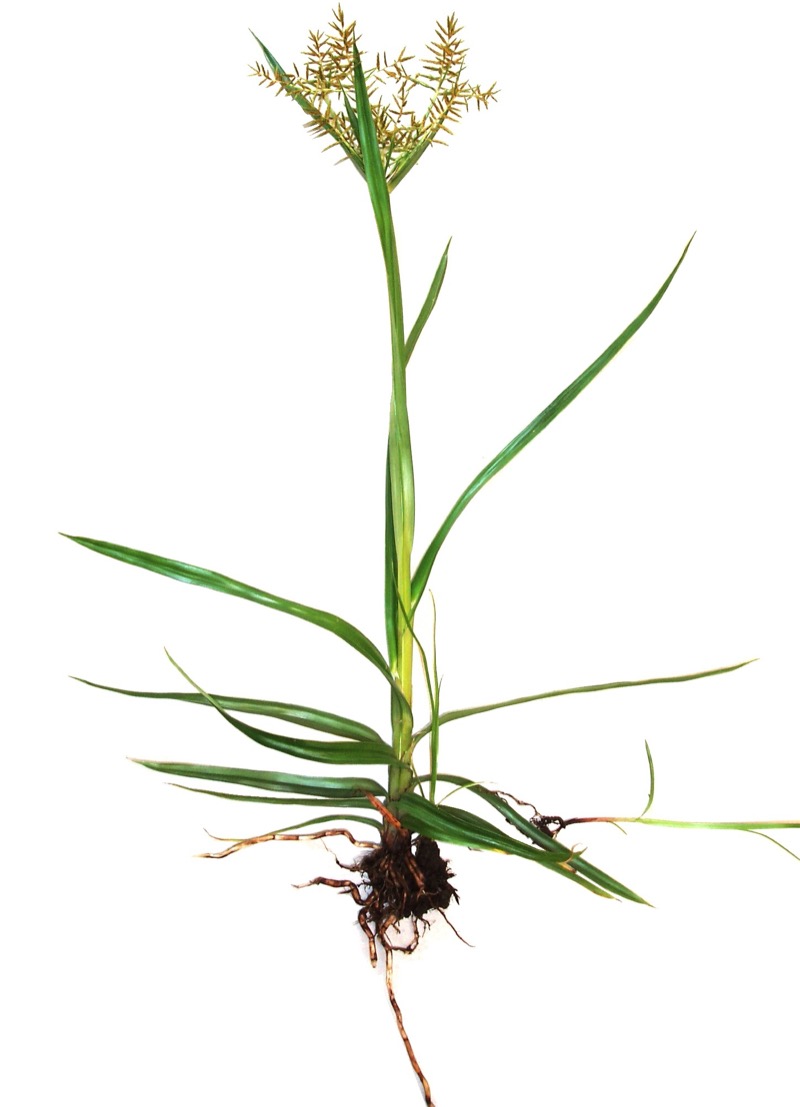
Growth Habit
Upright, grass-like blades that grow FASTER than turfgrass. Bright yellow-green color. Triangular stem. Spreads aggressively through underground tubers and rhizomes.
Pre-Emergent Control
Standard pre-emergents have LIMITED effectiveness. Specticle Flo provides some suppression.
Post-Emergent Control
Halosulfuron-methyl (Sedgehammer/Empero). Typically requires 2-3 applications at 6-10 week intervals.
Overview
Nutsedge (Cyperus spp.) is not a grass — it is a sedge, identifiable by its triangular stem cross-section (“sedges have edges”). It is one of the most persistent lawn weeds due to its underground tuber network, which can extend over a foot deep and remain dormant in soil for years.
Identification
Bright yellow-green, upright blades that grow noticeably faster than surrounding turfgrass — sticking up 2-3 days after mowing. Roll the stem between your fingers: if it feels triangular rather than round, it is nutsedge. Yellow nutsedge and purple nutsedge are the two main species.
Damage to Your Lawn
Nutsedge competes through root competition. Its underground tuber and rhizome network reaches well below the grass root zone, stealing moisture and nutrients. A single plant can produce 1,900 tubers in one growing season. This makes nutsedge one of the most aggressively spreading weeds.
Why Pulling Makes It Worse
Underground tubers snap off when you pull. Each broken tuber left in the soil becomes a new plant. Pulling can actually increase the nutsedge population by fragmenting the tuber network and stimulating dormant tubers to sprout.
Control Strategy
Halosulfuron-methyl (Sedgehammer/Empero) is the only reliable chemical control for homeowners. Plan on 2-3 applications spaced 6-10 weeks apart because tubers keep sending up new shoots after each treatment. Requires non-ionic surfactant.
Cultural control: Improve drainage. Nutsedge thrives in persistently wet soil. Reduce irrigation frequency and promote dense, healthy turf to suppress emergence.
Recommended Products
Affiliate disclosure: we may earn from qualifying purchases.
Halosulfuron-methyl
Yellow nutsedge and purple nutsedge control
$15-25