
Poa Annua
Invades thin turf in fall/winter, then dies in summer heat leaving bare patches. Lighter color and clumpy growth disrupt visual uniformity. Extremely persistent seed bank.
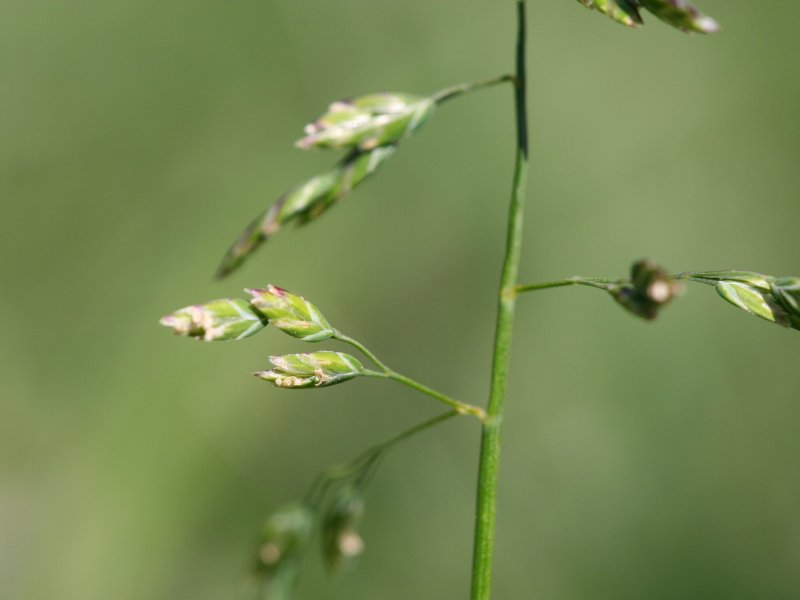
Growth Habit
Pale green, clumpy grass with distinctive whitish seed heads visible in spring. Germinates in late summer/fall, grows through winter, flowers and dies in late spring heat.
Pre-Emergent Control
Fall pre-emergent is primary defense. Prodiamine or isoxaben applied when soil drops below 70°F in late summer/early fall.
Post-Emergent Control
Very difficult to selectively remove from cool-season lawns. Mesotrione (Tenacity) provides some control.
Overview
Poa annua (annual bluegrass) is a winter annual grassy weed that is a primary problem in warm-season lawns but affects all US zones. It germinates in late summer and fall, grows through winter, produces prolific seed heads in spring, and dies when summer heat arrives — leaving bare patches.
Identification
Pale green, clumpy grass that stands out against darker turf. The most distinctive feature is whitish seed heads that appear in spring, visible even at low mowing heights. Individual plants form small, dense clumps rather than spreading uniformly.
Damage to Your Lawn
Poa annua invades thin turf in fall and winter when desirable grasses are dormant or growing slowly. Its lighter color and clumpy habit disrupt visual uniformity. When it dies in summer heat, it leaves bare patches that can be colonized by summer weeds like crabgrass. The seed bank is extremely persistent — a single plant produces hundreds of seeds that survive in soil for years.
Control Strategy
Fall pre-emergent (prevents weeds before they sprout) is the primary defense. Apply prodiamine or isoxaben when soil temperature drops below 70°F in late summer or early fall. This prevents Poa annua germination before it starts.
Cultural control: Maintain dense, healthy turf through fall overseeding to outcompete Poa annua for germination space. Avoid overwatering in fall, which creates favorable germination conditions.
These two defenses are mutually exclusive in the same fall. A traditional fall pre-emergent blocks all seed germination — your overseed included — so you cannot apply prodiamine or isoxaben and overseed in the same season. Pick one: if you’re overseeding, rely on dense turf plus mesotrione (Tenacity) at seeding for limited suppression; if you’re not seeding, the fall pre-emergent is your primary tool.
Post-emergent control in cool-season lawns is very difficult because Poa annua is closely related to desirable grasses. Mesotrione provides some selective control.
Recommended Products
Affiliate disclosure: we may earn from qualifying purchases.
Prodiamine 65%
Single-application season-long crabgrass and broadleaf weed prevention
$80-110
Mesotrione 40%
Pre-emergent protection during new seeding or overseeding. Also post-emergent on select broadleaf and grassy weeds.
$30-70