
Goosegrass
Forms flattened rosettes in compacted or thin areas. Crowds out turf in high-traffic zones, along sidewalks, and in worn areas. Tolerates close mowing and heavy foot traffic better than turfgrass.
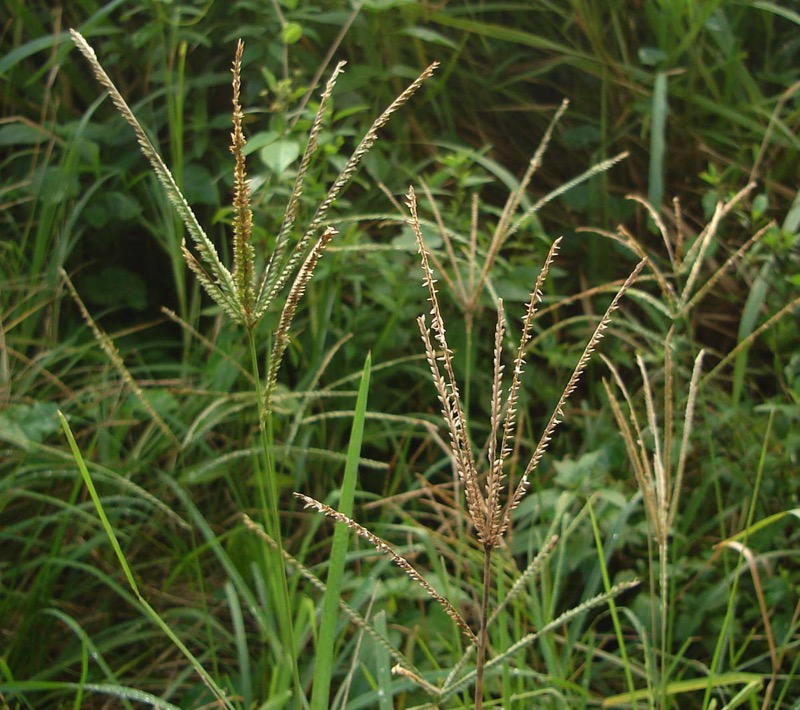
Growth Habit
Low-growing, flat rosette radiating from a white or silver central crown. Coarse, dark green blades. Thrives in compacted, heavy-traffic areas.
Pre-Emergent Control
Prodiamine or dithiopyr applied at standard spring timing. Goosegrass germinates 2-3 weeks later than crabgrass, so pre-emergent is usually still active.
Post-Emergent Control
Quinclorac provides some control. More difficult to kill than crabgrass post-emergence. Multiple applications may be needed.
Overview
Goosegrass (Eleusine indica), also known as silver crabgrass, is a summer annual grassy weed most problematic in zones 6-10. It thrives in compacted, heavy-traffic areas where turfgrass struggles — along sidewalks, around swing sets, and in worn paths across the lawn.
Identification
Low-growing, flattened rosette with coarse, dark green blades radiating from a distinctive white or silvery central crown. This pale center is the easiest way to distinguish goosegrass from crabgrass. Blades are flatter and darker than crabgrass, and the plant tolerates very close mowing.
Damage to Your Lawn
Goosegrass is an indicator of soil compaction. It crowds out turf in areas with heavy foot traffic, poor drainage, or compacted soil. Its flat growth habit allows it to survive mowing heights that would damage other weeds, making it persistent in high-traffic zones.
Control Strategy
Spring pre-emergent prevents goosegrass effectively. Goosegrass germinates 2-3 weeks after crabgrass (soil temp around 60-65°F), so standard pre-emergent applications are usually still active when goosegrass tries to germinate.
Post-emergent control is more difficult than crabgrass. Quinclorac provides some control but may require multiple applications. Hand-pulling is effective for isolated plants — grab the whole rosette at the white central crown and pull when soil is moist.
Address the root cause: Goosegrass indicates compaction. Core aeration in fall reduces compaction and helps turfgrass reestablish in affected areas.
Recommended Products
Affiliate disclosure: we may earn from qualifying purchases.
Prodiamine 65%
Single-application season-long crabgrass and broadleaf weed prevention
$80-110
Dithiopyr 24%
Split-app first pass, late starters, or anyone planning fall overseeding
~$160
Quinclorac
Killing emerged crabgrass at any growth stage, plus some broadleaf weeds
$30-60