
Crabgrass
Forms dense, spreading mats that shade out desirable grass. Each plant can cover 1-2 sq ft. When it dies at first frost, it leaves large bare patches vulnerable to erosion and winter weed invasion.
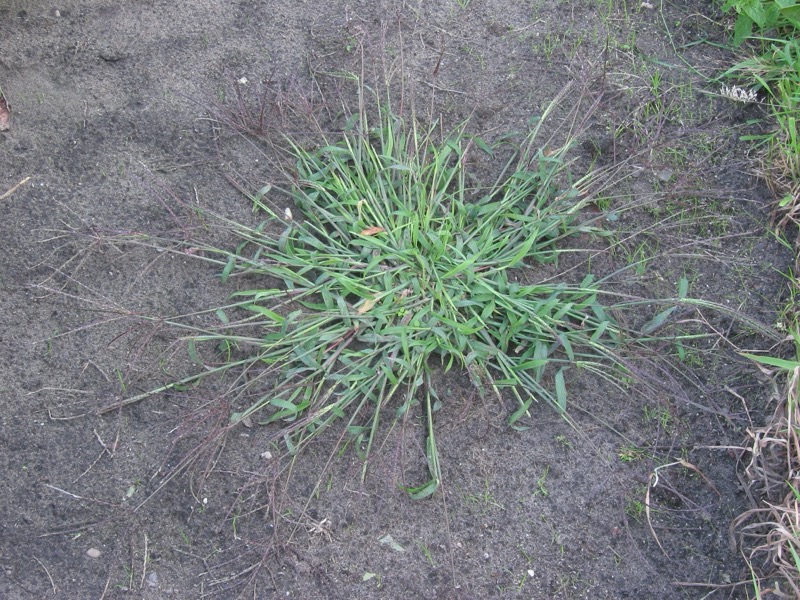
Growth Habit
Low-growing, spreading mat. Stems radiate outward from a central point (star-shaped when viewed from above). Pale green, wider blades than most turfgrass.
Pre-Emergent Control
Prodiamine, dithiopyr, pendimethalin. Apply when soil temp reaches 50-55°F sustained.
Post-Emergent Control
Quinclorac (Drive XLR8) with MSO surfactant. Effective at any growth stage.
Overview
Crabgrass (Digitaria spp.) is the most common summer annual grassy weed in US lawns. It germinates when soil temperatures reach 55-60°F, with 80% germination occurring at 60-70°F. A single plant can produce over 150,000 seeds per season, and those seeds remain viable in soil for 3+ years, creating a persistent seed bank.
Identification
Look for pale green, wide-bladed grass growing in a star-shaped pattern from a central point. Crabgrass grows lower and wider than most turfgrass, forming spreading mats that can cover 1-2 square feet per plant. It is most visible in mid-summer when it grows aggressively in heat that slows cool-season grasses.
Damage to Your Lawn
Crabgrass competes through light competition (canopy shading). Its spreading, low-growing mats physically cover and shade out grass blades underneath, preventing photosynthesis. When crabgrass dies at the first frost, it leaves large bare patches that are vulnerable to erosion and winter weed invasion.
Control Strategy
Prevention is key. Spring pre-emergent herbicide (prodiamine or dithiopyr) applied when soil temperatures reach 50-55°F stops crabgrass before it starts. This is far more effective than trying to kill established crabgrass.
If crabgrass breaks through, quinclorac (Drive XLR8) with MSO surfactant is the most effective post-emergent option. It kills emerged crabgrass at any growth stage.
Mid-summer decision: If crabgrass is moderate and you plan to overseed in fall, you can let it die naturally at first frost and fill the gaps with seed in September. If severe and spreading, apply quinclorac now to stop seed production.
Seed Production
150,000+ seeds per plant per season. Seeds viable in soil for 3+ years. This is why breaking the cycle with pre-emergent is so important — one missed year can set you back several seasons.
Recommended Products
Affiliate disclosure: we may earn from qualifying purchases.
Prodiamine 65%
Single-application season-long crabgrass and broadleaf weed prevention
$80-110
Dithiopyr 24%
Split-app first pass, late starters, or anyone planning fall overseeding
~$160
Pendimethalin
Homeowners who want a simple granular application without spray equipment
$25-35
Quinclorac
Killing emerged crabgrass at any growth stage, plus some broadleaf weeds
$30-60