
White Clover
Spreads by stolons to form patches that visually disrupt uniform turf. Competes for space but generally coexists with grass rather than killing it. Indicates low nitrogen levels.
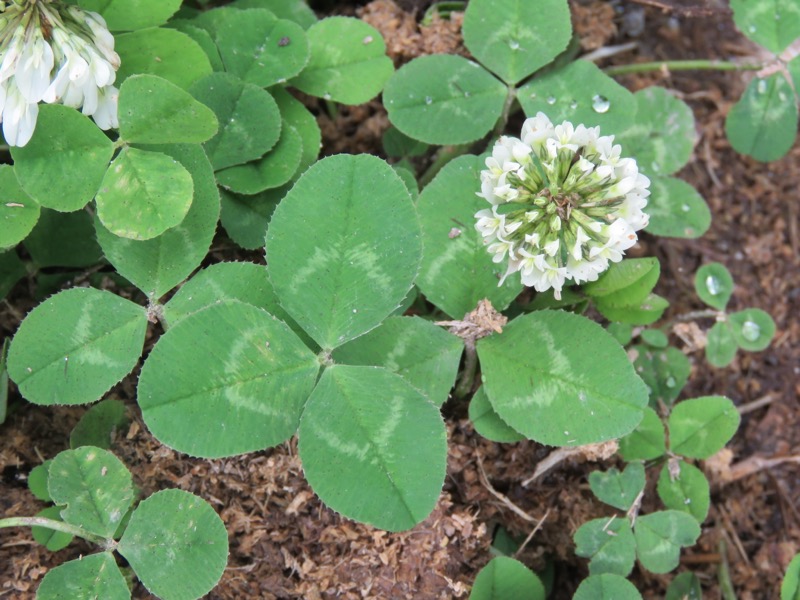
Growth Habit
Three-part leaves, small white flower clusters, creeping stolons. Fixes nitrogen from air into soil.
Pre-Emergent Control
Isoxaben (fall application).
Post-Emergent Control
Triclopyr is most effective. 3-way combos (2,4-D) work but slower.
Overview
White clover (Trifolium repens) is a creeping perennial broadleaf legume found across all US zones. Unlike most weeds, clover actually improves soil health by fixing atmospheric nitrogen. Its presence often indicates low nitrogen levels in the soil.
Identification
Three-part (trifoliate) leaves with a light green chevron marking on each leaflet. Small white to pinkish flower clusters on short stems. Creeping stolons spread along the soil surface, rooting at nodes.
Damage to Your Lawn
Clover competes for space and visually disrupts the uniform appearance of a turf lawn. However, it generally coexists with grass rather than killing it outright. Many homeowners intentionally tolerate some clover because it stays green during drought, fixes nitrogen, and supports pollinators.
The Clover Decision
Before treating clover, consider whether you actually want to remove it. Clover is drought-resistant, stays green when grass goes dormant, feeds bees and pollinators, and adds nitrogen to your soil for free. A growing number of lawn care enthusiasts are embracing clover as a beneficial part of their lawn ecosystem.
Control Strategy
If you want clover gone, triclopyr is the most effective herbicide. 3-way broadleaf combos (2,4-D + dicamba + mecoprop) also work but act more slowly.
Cultural control is often the best long-term fix: increase nitrogen fertilization. Healthy, well-fed grass outcompetes clover naturally. If clover is thriving, your lawn is likely nitrogen-deficient.
Recommended Products
Affiliate disclosure: we may earn from qualifying purchases.
Triclopyr
Creeping charlie (ground ivy), clover, wild violet, oxalis, English ivy
$15-30
2,4-D + Dicamba + Mecoprop
Dandelions, clover, plantain, chickweed, and most common broadleaf weeds
$20-40
24-0-6 (slow-release nitrogen + potassium)
Spring and fall fertilization for cool-season lawns. Slow-release nitrogen with light potassium.
$30-50